
Understanding RTP in Slot Games
Many players see RTP beside a slot game and think it explains everything. This Gembet guide slows the topic down and explains what RTP really means, what it does not mean, how it connects with volatility, and how beginners can use it without falling for the usual misunderstandings.
WELCOME TO GEMBET
Up to SGD 2,980Create an account and continue exploring Gembet slot guides.
Register NowWhat does RTP actually mean in slot games?
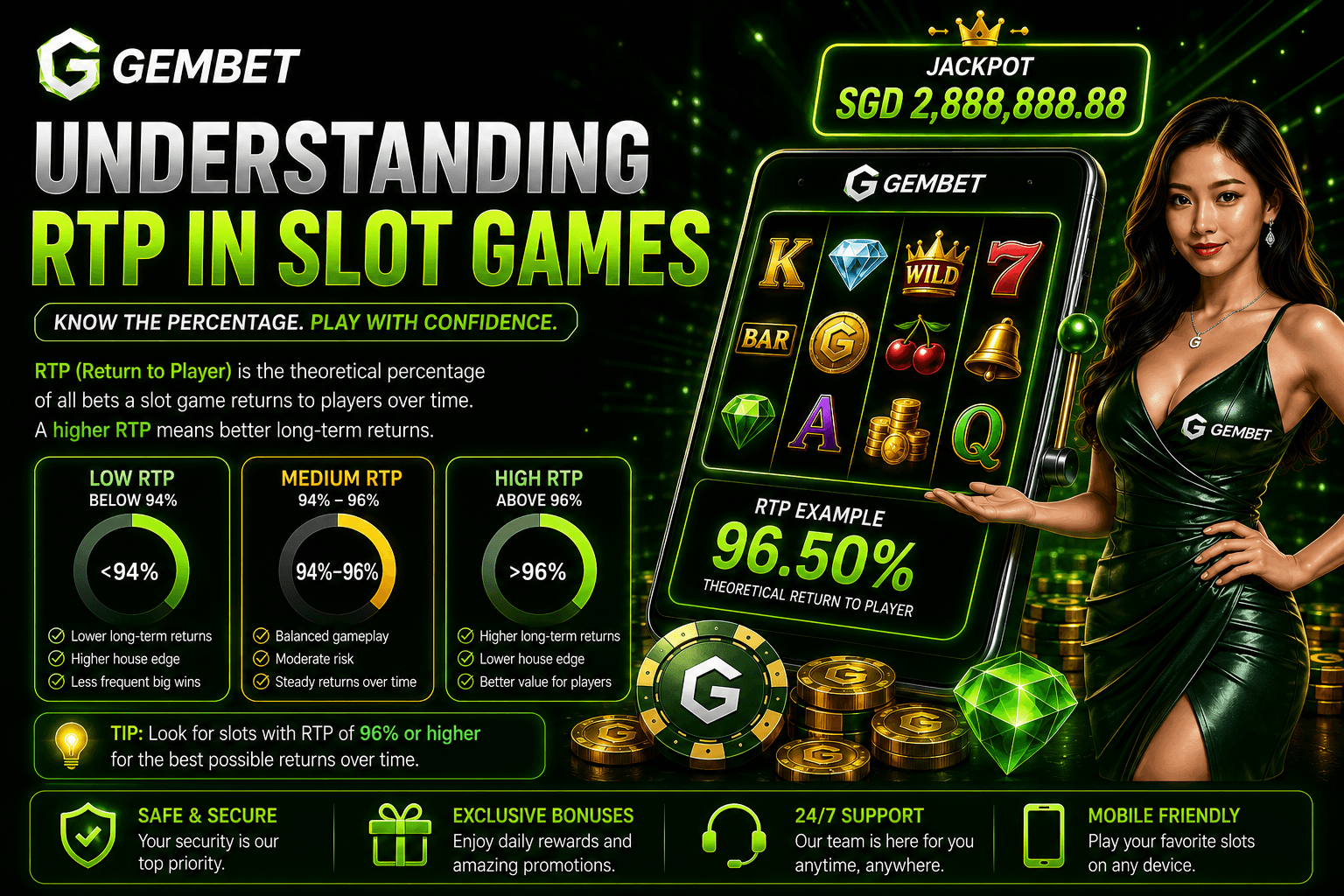
RTP means Return to Player, and it is one of the first numbers many players notice when they start comparing slot games. The problem is that many readers treat RTP like a short-term promise, when it is actually a long-term theoretical percentage based on a very large amount of play.
If a slot shows 96% RTP, it does not mean a player who starts with SGD 100 should expect SGD 96 back today. It means the game is designed around that theoretical return over a huge sample size, while real sessions can still move sharply above or below that number.
For beginners in Singapore, the best way to use RTP is as a reading tool, not as a guarantee. It helps you compare games more calmly, but it does not remove uncertainty, volatility or the need to read the actual game rules.
This is why Gembet connects RTP back to the main Slot Game Guide. RTP only makes sense when you also understand volatility, free spins, bonus rounds, bet size and the way a slot pays over time.
Does higher RTP mean a slot will pay more often?
No, a higher RTP does not automatically mean the game will pay more often in your short session. This is where many players get trapped, because a clean percentage looks more reliable than it really is. Humans do love turning one number into a full life philosophy, which is adorable and financially dangerous.
A game with 96.5% RTP can still feel quiet if it has high volatility. Another game with 95.5% RTP may feel more active if it gives smaller results more often. The first game may be stronger on paper, but the second game may feel more comfortable for a player with a smaller budget.
The correct question is not only “which RTP is higher?” A better question is “how does the game behave, how are features triggered, and what kind of budget does the game rhythm require?”
This is why Gembet avoids writing slot guides as simple rankings. A helpful guide should explain how to read the game, not just point at the biggest number and pretend the job is done.
What is the difference between RTP and volatility?
RTP and volatility are connected, but they answer different questions. RTP explains the long-term theoretical return of the game. Volatility explains how the game may feel during play.
Low volatility slots usually feel more active because they may return smaller results more frequently. High volatility slots may stay quiet longer, then depend more on larger bonus moments, feature triggers or free spin rounds. Medium volatility sits between those two styles, although every game still has its own rules.
Many players blame RTP when the real issue is volatility. They say a game has high RTP but feels difficult, when the game may simply be designed around less frequent feature moments.
The safest reading habit is to check both. RTP gives you the long-term math. Volatility gives you the likely rhythm. Reading one without the other is like reading half a map and then acting surprised when the road disappears.
How should beginners use RTP before choosing a slot?
Imagine a beginner comparing three slots. One shows 97% RTP, one shows 96%, and one shows 95%. The easy answer is to choose 97%, but the useful answer is to check what kind of game that 97% slot actually is.
If the 97% slot has high volatility and complicated bonus rules, it may not suit a new player who wants to learn slowly. If the 96% slot has clearer rules, simpler features and a comfortable bet range, it may be easier to understand.
A practical checklist works better than chasing the highest number. Check RTP, check volatility if available, read the paytable, understand free spins, confirm the bet range and decide your limit before playing.
This approach also helps when reading provider guides such as 918Kiss, Mega888, Pussy888, V Power, UU Slot, WF Gaming, MegaH5 and Evo888H5. The name matters less than how the game works.
Do free spins and bonus rounds affect how RTP feels?
Yes, bonus features can strongly affect how a slot feels, even if the RTP number looks normal. Some games place a large part of the excitement inside free spins, multipliers or special bonus rounds. That means the base game may feel quiet until the feature appears.
Other games may give smaller activity in the base game and less dramatic bonus rounds. Both types can have similar RTP, but the player experience can be completely different. This is why only looking at RTP is not enough.
Free spins are a good example. A player may assume free spins are always valuable, but different games use different rules. Some free spins include multipliers, some include expanding wilds, and some are simply extra rounds with no big changes.
When Gembet later expands the Free Spins guide, this RTP article will connect naturally with it. RTP explains the long-term design, while free spin rules explain one of the most important moments inside the game.
Should RTP affect how players read casino promotions?
RTP can help players understand the game, but promotion rules still matter more when a bonus is involved. A bonus may look generous, but if the wagering requirement is high or the eligible games are limited, the headline number may not mean much.
A player might choose a high RTP slot while using a promotion and still misunderstand the offer. Some bonuses exclude certain games, reduce contribution percentage, apply maximum cashout or expire quickly. The boring terms are often where the real story lives, because apparently casinos also enjoy paperwork as a hobby.
Before claiming any slot-related bonus, readers should check the Promotion Guide. If the promotion includes free spins, check which game receives the spins, whether winnings are withdrawable and whether wagering applies afterward.
RTP is useful, but it cannot fix a promotion the player did not understand. Read the rules first, then compare the game.
What RTP mistakes do slot players make most often?
The first mistake is treating RTP as a personal prediction. RTP is not telling you what will happen in your next ten spins, your next hundred spins or your weekend session. It is long-term theory, not a fortune cookie.
The second mistake is ignoring volatility. A high RTP game can still feel rough if the wins are less frequent. A lower RTP game can feel smoother if it pays smaller results more often.
The third mistake is chasing losses because the player believes the slot is “due.” Slot games do not owe the next result because the previous rounds were quiet. That kind of thinking is one of the fastest ways to lose control.
The fourth mistake is comparing provider names without reading game rules. A player may jump from one provider guide to another and assume the experience is the same. It usually is not. Read the paytable, feature rules and bonus terms.
What should players check before choosing a slot game?
Start with RTP if it is available, but do not stop there. Check volatility, paylines, bet size, bonus features and free spin rules. These details explain the game more clearly than the theme alone.
Then ask whether the game fits your budget. A high volatility game may require more patience and stronger limits. A simpler lower volatility game may be better for someone who wants a slower learning experience.
If a promotion is involved, check wagering requirements, expiry time, eligible games and maximum withdrawal. Many players choose a game first and read the terms later, which is a wonderful way to make simple things painful.
Finally, decide your stop point before starting. RTP is not a substitute for discipline. A player with a clear limit is already reading the game better than someone chasing a percentage.
How should RTP fit into responsible gaming?
RTP should make players more careful, not more reckless. If someone explains RTP like it is a winning formula, that explanation is not helpful. A useful guide should make risk clearer, not hide it under a shiny percentage.
Responsible gaming starts with boundaries. Set a budget, set a time limit and never use money needed for bills, savings or responsibilities. Slot games are entertainment, not a financial plan, because the world is already strange enough without treating reels as retirement strategy.
Gembet keeps Responsible Gaming visible because slot education should include risk. Understanding RTP helps you ask better questions, but it does not remove uncertainty.
Use RTP as one part of your reading process. Compare it with volatility, features, rules and your own limits. That is how the number becomes useful instead of misleading.
Frequently Asked Questions About RTP
Is RTP the same as winning chance?
No. RTP is a long-term theoretical return percentage, not a direct winning chance for one player or one session.
Is a higher RTP slot always better?
Not always. Higher RTP can be useful, but volatility, bonus rules, bet size and game rhythm also matter.
Can RTP predict when a slot will pay?
No. RTP does not predict timing, free spin triggers or short-term results.
Should beginners choose only high RTP games?
Beginners should read RTP together with volatility, game rules, bonus features and budget limits.
Does RTP matter when using a promotion?
Yes, but promotion rules such as wagering, eligible games and withdrawal limits matter just as much.
Where should I continue after reading this guide?
Continue with the Slot Game page, related provider guides or future Gembet articles about volatility and free spins.
Keep learning slot basics with Gembet
RTP is only one part of slot reading. Continue with volatility, free spins and provider guides to understand the full picture.